If your home hits the market in Gallatin with the wrong price or a tired first impression, buyers can move on fast. That can feel frustrating when you know your home has real value. The good news is that in a balanced market, smart pricing and thoughtful presentation can help you stand out and attract stronger interest. Let’s dive in.
Gallatin sellers need a sharp strategy
Gallatin is not moving like an extreme seller's market right now. Public market snapshots show buyers have options, with Realtor.com reporting 842 homes for sale, a median listing price of $465,966, a 100% sale-to-list ratio, and median days on market of 52 as of April 2026. Zillow also puts the average Gallatin home value at $435,264 and says homes go pending in about 52 days.
Other data points show some variation, which is normal across sources. Redfin reported a March 2026 median sale price of $435,000 and median days on market of 110. Greater Nashville REALTORS® reported about six months of inventory across the broader nine-county region in April 2026, which is a common sign of a balanced market.
For you as a seller, the takeaway is simple: buyers usually have enough choices to compare homes carefully. That means pricing accuracy and presentation matter more than testing the market with an ambitious number.
Price your home for today's market
A strong list price should reflect what buyers are willing to pay now, not what the market may have supported during a hotter season. In Gallatin, current data suggests homes are generally not flying off the shelf overnight. When homes sit, buyers often start to wonder what is wrong, even when the issue is only price.
Zillow's Sumner County data adds helpful context here. It reports a median sale price of $405,500, median days to pending of 44, a median sale-to-list ratio of 0.986, and 63.2% of sales below list price. That points to a market where careful pricing can make a meaningful difference.
Start with the right comps
Not all Gallatin homes should be compared the same way. Recent sales show a wide range, from a $332,000 townhome to properties at $639,000, $799,000, and even over $1 million. The gap comes from differences in lot type, location, acreage, updates, water access, and overall amenity package.
That is why citywide averages only tell part of the story. You need to compare your home to properties with similar:
- Square footage
- Lot size
- Neighborhood or submarket
- Level of updating
- Special features like lake views, acreage, or outdoor amenities
For example, Gallatin's median sale price around $435,000 is above Sumner County's median of $405,500. Realtor.com also shows neighborhood-level differences, with Fairvue Plantation around a $1.07 million median listing price. Micro-market details matter in Gallatin.
Avoid the most common pricing mistake
One of the biggest seller mistakes is pricing a home as if it is already fully updated when buyers will clearly see that it is not. Realtor.com seller guidance notes that minor cosmetic updates can help, while major renovations rarely return full cost.
If your home needs cosmetic work, it can still sell well. The key is to match your list price to its actual condition and let buyers feel like the value makes sense. A realistic price often creates more momentum than a higher number that leads to price cuts later.
Leave only a small negotiation buffer
In a market where many homes sell below list price, a large pricing cushion can work against you. Buyers today are comparing options closely and watching for value. If your home appears overpriced from day one, you may miss the strongest early interest.
A smarter strategy is to anchor the price to recent comparable sales and leave only a modest buffer for negotiation. That approach can help you stay competitive while still protecting your bottom line.
Why similar Gallatin homes sell differently
It is easy to assume two homes with similar square footage should sell for about the same price. In Gallatin, recent sales show that is often not the case. Details that seem small on paper can create major shifts in value.
A home on acreage may appeal differently than one in a neighborhood setting. A lake-view property with a dock or slip will likely sit in a different pricing category than a similar-sized home without those features. Updated interiors, finish quality, and a separate-entrance apartment can also move value in a big way.
This is why broad averages can be misleading. If you want to price well, you need to understand which features actually place your home in a more competitive segment and which do not.
Presentation can shape buyer response
Once your price gets buyers in the door, presentation helps them connect with the home. According to the National Association of Realtors' 2025 staging survey, 83% of buyers' agents said staging made it easier for a buyer to visualize a property as a future home. The same survey found that 17% said staging increased the dollar value offered by 1% to 5% compared with similar unstaged homes.
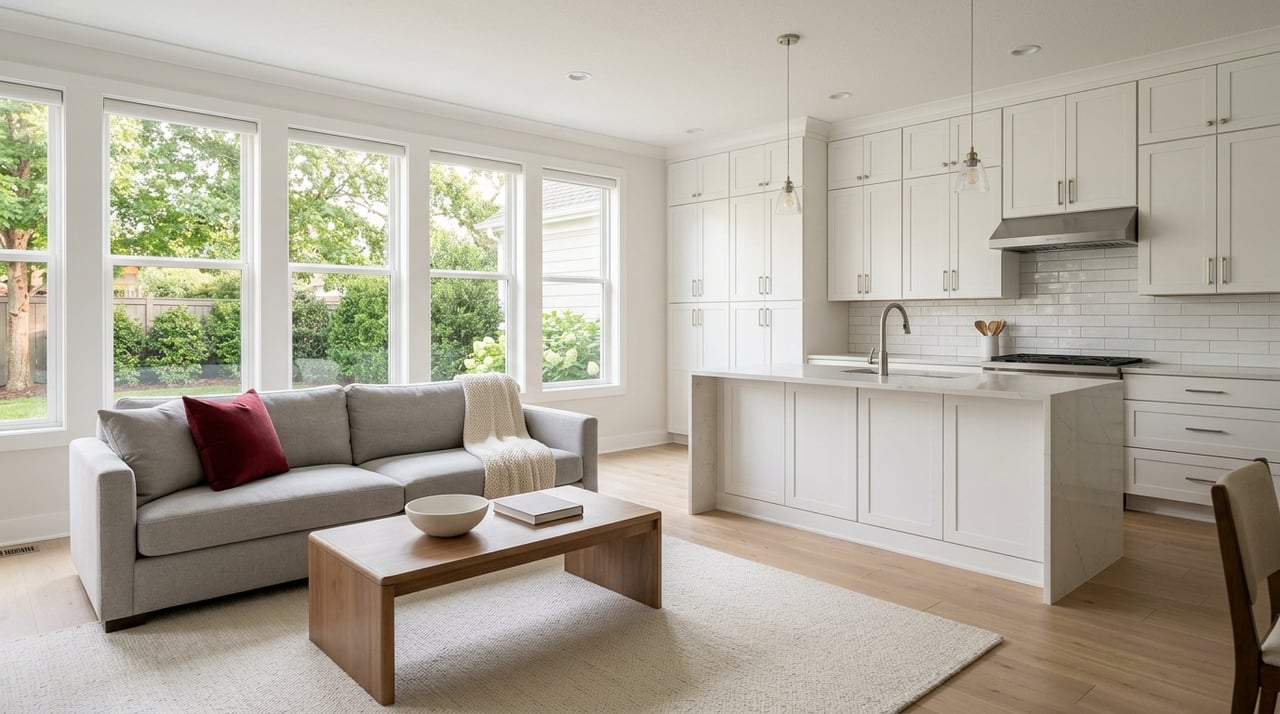
That does not mean you need an expensive full-house makeover. It does mean that clean, bright, simple spaces often help buyers respond more positively both online and in person.
Focus on the rooms that matter most
The rooms most often treated as high priority for staging are the living room, primary bedroom, and kitchen. Sellers' agents also commonly focus on the dining room. If your time or budget is limited, start there.
These rooms tend to shape a buyer's overall impression of the home. When they feel open, clean, and easy to understand, the entire property often feels more move-in ready.
Follow the right order of operations
In most cases, the best presentation plan is not complicated. It usually looks like this:
- Deep clean every room
- Remove excess furniture and personal items
- Repair visible wear and tear
- Add neutral paint where needed
- Improve lighting
- Organize closets and storage areas
NAR defines staging as cleaning, decluttering, repairing, depersonalizing, and updating the home so buyers can better picture themselves in the space. That definition is helpful because it keeps the focus on practical improvements, not perfection.
Make your home feel brighter and simpler
NAR also notes that buyers tend to respond well to natural light, neutral wall colors, open space, streamlined décor, durable flooring, and visible storage. In plain terms, your goal is to make the home feel calm, cared for, and easy to live in.
That may mean taking down bold personal décor, moving bulky furniture into storage, or replacing a few tired light bulbs with brighter ones. Small changes can have a big effect on how spacious and inviting your home feels.
Which updates matter most before listing
If you are deciding where to spend money, start with the updates buyers will notice right away. Cosmetic fixes and repairs that remove obvious objections usually matter more than large remodeling projects. That is especially true when major renovations may not return their full cost.
Before listing, prioritize items like:
- Touch-up paint in worn areas
- Minor drywall or trim repairs
- Replacing outdated or broken light fixtures
- Fixing leaky faucets or loose hardware
- Cleaning or refreshing flooring
- Updating heavily worn caulk or grout
- Improving curb appeal with basic yard cleanup
These improvements help buyers feel that the home has been maintained. That confidence can support your pricing and reduce distractions during showings.
What to budget for staging
Many sellers want to know if staging is worth the cost. NAR reports a median spend of $1,500 when using a staging service and $500 when the seller's agent stages the home personally. Those numbers can help you plan, but the right approach depends on your home's condition, layout, and price point.
For some Gallatin homes, simple preparation and light staging may be enough. For others, especially vacant homes or properties where the layout is hard to read, more intentional staging may help buyers understand the space more quickly.
Virtual staging can also help online marketing when a home is vacant. Still, the in-person experience needs to feel believable and consistent with what buyers saw in the photos.
A practical plan to sell with confidence
If you want a strong result in Gallatin, the most effective path is usually straightforward. Price from recent comparable sales, not hope. Prepare the home so buyers can see its value clearly. Then launch with a clean, competitive presentation from day one.
In a market where buyers have choices, that combination can help you avoid unnecessary time on market and put your home in a better position to attract serious offers. Selling well is rarely about gimmicks. It is about making smart decisions early.
If you are thinking about selling in Gallatin and want clear, local guidance on pricing, prep, and next steps, Eddie Poole would be glad to help you build a plan that fits your home and your goals.
FAQs
How should you price a home in Gallatin, TN?
- Use recent comparable sales with similar square footage, lot size, neighborhood, condition, and features. In Gallatin, broad city or county averages are helpful, but they are not enough on their own.
What presentation tips matter most when selling a Gallatin home?
- Focus first on deep cleaning, decluttering, repairs, neutral paint, better lighting, and organized storage. The living room, primary bedroom, and kitchen are often the most important rooms to prioritize.
Why do similar homes in Gallatin sell for different prices?
- Recent Gallatin sales show that acreage, lake access, updated interiors, neighborhood tier, and special amenities can change value significantly, even when homes have similar size.
Which updates are worth doing before listing a Gallatin house?
- Minor cosmetic updates and repairs that remove obvious buyer concerns usually matter more than major remodels. Small fixes often support both presentation and pricing.
How much does home staging cost for Gallatin sellers?
- Based on NAR's 2025 staging data, the median spend was $1,500 when using a staging service and $500 when the seller's agent staged the home personally.
How long does it take to sell a home in Gallatin, TN?
- Public market data varies by source, but current snapshots suggest many homes are moving in roughly the seven-week range, while some reports show longer timelines. That makes accurate pricing and strong presentation especially important.