Trying to decide between Lebanon and Mount Juliet and wondering how your daily trip into downtown Nashville will really feel? Your commute shapes your mornings, budgets, and stress level, so it deserves a clear-eyed look. In this guide, you’ll see realistic drive-time ranges, how the WeGo Star train fits different schedules, and a simple way to compare costs and quality of life. Let’s dive in.
Big picture: Where you save time
Distance and routes
Both Lebanon and Mount Juliet sit east of Nashville along I-40. Mount Juliet is closer to downtown, typically about 12–20 miles away depending on your starting point, while Lebanon is farther, roughly 20–28 miles from the core. Most commuters either drive I-40 or use the WeGo Star commuter rail, which offers weekday service with stations in both cities.
Who tends to benefit
If your priority is minimizing daily drive time, Mount Juliet usually saves minutes compared with Lebanon. If you value more space, certain lower-cost housing segments, or a quieter suburban/rural feel, Lebanon can be a great fit. Your best choice often comes down to whether your schedule can match the WeGo Star timetable or whether you need the flexibility of driving.
Driving I-40: What to expect
Typical drive-time ranges
- Mount Juliet to downtown Nashville: about 20–35 minutes in light or average traffic. During peak congestion, it commonly rises to the mid-30s and can reach 40–60+ minutes if there are incidents.
- Lebanon to downtown Nashville: about 30–50 minutes in light or average traffic. During peak congestion or incidents, it can extend to 50–80+ minutes.
Actual times vary by your exact start and end points, day of week, weather, and special events.
Patterns that slow you down
Morning westbound traffic into the city is the daily hot spot. Evenings bring the reverse as eastbound lanes fill heading home. Recurring bottlenecks include interchanges near Donelson and the I-40/I-24/Briley Parkway complex, and nonrecurring events like crashes or lane closures can quickly add time.
Reliability and buffer time
Driving gives you freedom to leave when you want, but it is less predictable. Incident-driven delays are the biggest wild card on I-40. Commuters in Lebanon typically build a larger time buffer than those in Mount Juliet to reliably hit a fixed start time.
Practical tips for drivers
- No interstate tolls on I-40 in this corridor.
- Expect seasonal construction to affect travel times.
- Use live navigation at your usual departure times to track realistic day-to-day patterns.
Train option: WeGo Star from both cities
How the service works
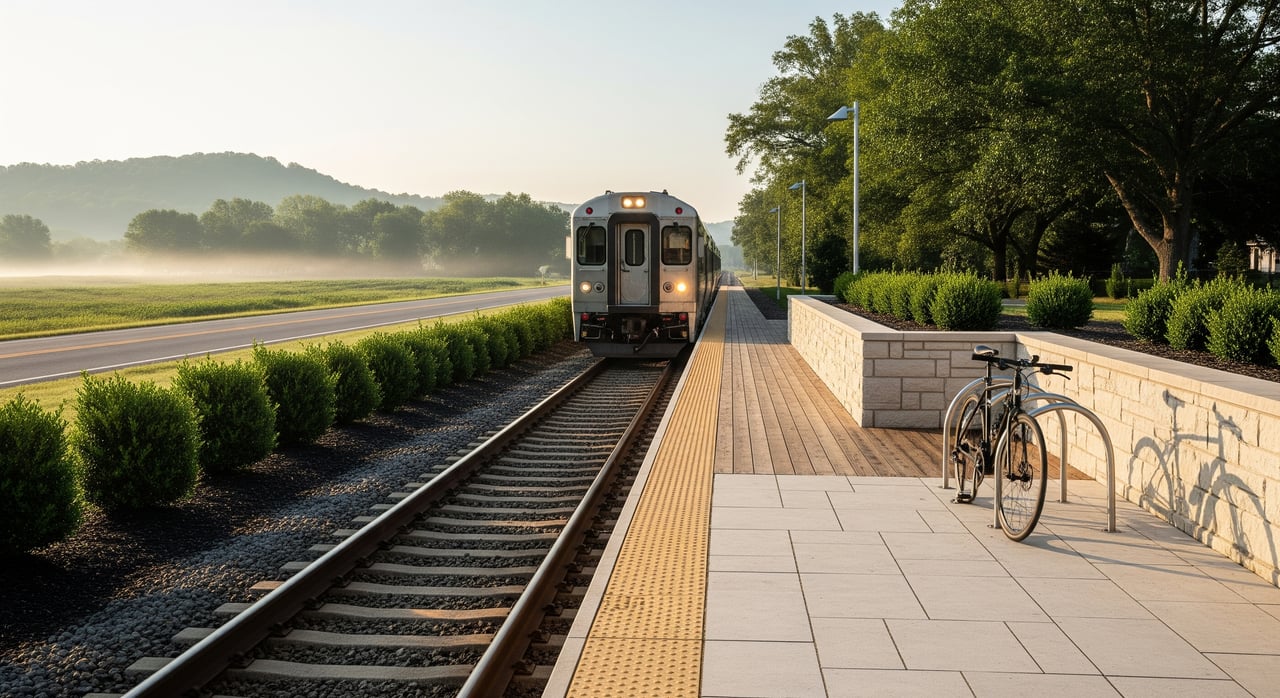
The WeGo Star provides a weekday commuter link between downtown Nashville and the eastern suburbs, with stations that serve Mount Juliet and Lebanon. Service focuses on traditional commuting: inbound trains in the morning and outbound in the evening. Frequency is limited compared to all-day transit.
Travel time and predictability
From Lebanon, the in-train ride to downtown generally falls in a predictable range of roughly 30–45 minutes. Mount Juliet’s ride is shorter because it is closer in. Rail avoids highway incidents, so your day-to-day travel time is steadier, though occasional delays can still happen.
Parking and last-mile details
Stations in Mount Juliet and Lebanon offer commuter parking, and some lots can fill early on busy weekdays. Many riders use drop-offs, rideshare, or park-and-ride. Once downtown, you can walk to nearby offices or use a short rideshare or local bus for the last mile.
Is rail a fit for you?
Rail works well if your schedule matches the morning and evening trains and you appreciate a calmer, more predictable trip. It is less convenient if you need late-night returns, off-peak hours, or frequent mid-day flexibility. Missing a train can be costly to your schedule because of the limited frequency, so plan a backup if you must be on time.
Costs, time, and stress: Build your comparison
Use this simple framework to compare monthly driving and rail. Plug in your own numbers based on current prices and your work schedule.
Driving costs to consider:
- Fuel for roundtrips per month
- Downtown parking fees (if not employer-provided)
- Wear and tear, maintenance, and insurance
- Your time cost and schedule variability
Rail costs to consider:
- Monthly pass or per-ride fares
- Station parking, if applicable
- Last-mile costs downtown (short rideshare or bus)
- Your time savings from predictable travel and reduced stress
Quick fill-in template
- Driving monthly estimate: Fuel $____ + Parking $____ + Other $____ = $____
- Rail monthly estimate: Pass $____ + Station parking $____ + Last mile $____ = $____
- Time and stress: Driving variability _____ vs Rail predictability _____
Two commute playbooks to try
Drive-first plan
- Leave at your usual time and track real travel times for a full workweek.
- Build a buffer that gets you downtown on time despite common slowdowns; Lebanon drivers generally need more buffer than Mount Juliet drivers.
- Identify two alternate routes or departure times for when incidents hit I-40.
Rail-first plan
- Test a week of train commuting to see how well the schedule aligns with your start and end times.
- Arrive at the station early enough to secure parking or allow for drop-off.
- Set a backup plan for meetings or emergencies that fall outside the train timetable.
Family and lifestyle factors
Predictability vs flexibility
If your hours are fixed and you dislike traffic surprises, rail can be a good fit. If your workday shifts, includes late returns, or you handle mid-day errands, driving offers more flexibility.
Childcare and activities
Childcare drop-off and pickup often steer families toward a vehicle. Train commuters should coordinate handoffs or use a rideshare for after-school activities.
Health, stress, and productivity
Some commuters value the train for lower stress and the ability to read, work, or rest. Driving can be efficient on light days but more draining during incidents and heavy congestion.
Parking and downtown access
If you drive, include downtown parking fees and availability in your decision. Many offices provide parking, but public garages and meters are paid. If you take the train, plan the last mile from the downtown terminal to your office and consider walkability, bike access, or a short local transit or rideshare hop.
How to test your own commute in one week
- Pick two target arrival times and test both.
- Run live navigation checks at your real departure times on at least three weekdays.
- Try both options: two days driving, two days rail, and one day with your preferred backup plan.
- Track total door-to-door time, cost per day, and stress level on a simple scorecard.
- Choose the option that best balances time, reliability, cost, and family logistics.
Choosing between Lebanon and Mount Juliet: Quick checklist
- Do you need daily schedule flexibility or mostly 9–5 predictability?
- Is your employer within a comfortable walk of the downtown terminal or does it require a short rideshare?
- Do you prefer larger lot sizes and potentially lower housing costs, or shorter daily drive times?
- How often do you expect to commute each week if you have hybrid or remote options?
- What are your childcare and activity timelines, and which mode best supports them?
Ready for local guidance?
You do not have to figure this out alone. If you want a neighborhood-by-neighborhood view of commute tradeoffs, plus current housing options that match your routine, reach out to Eddie Poole. We live and work here, and we are glad to help you decide with confidence.
FAQs
How long is the Mount Juliet to downtown Nashville drive in rush hour?
- Typical ranges run about 20–35 minutes in lighter traffic, rising to the mid-30s and sometimes 40–60+ minutes when incidents or heavy congestion hit.
How long is the Lebanon to downtown Nashville drive in rush hour?
- Typical ranges run about 30–50 minutes in lighter traffic, with peak periods or incidents pushing many days into 50–80+ minutes.
Is the WeGo Star a reliable daily alternative from Mount Juliet or Lebanon?
- The in-train time is generally predictable and avoids highway incidents, but limited weekday frequency means it works best for schedules that match the morning inbound and evening outbound trains.
Where do I park if I take the train from Mount Juliet or Lebanon?
- Stations in both cities offer commuter parking, and lots can fill early on busy weekdays; many riders use drop-offs or rideshare to simplify the morning.
How do I compare the cost of driving vs riding the train each month?
- Add up fuel, parking, and vehicle costs for driving, then compare to your rail pass, station parking if any, and last-mile rideshare; factor in your time and stress level.
What if my schedule changes or I miss the train?
- Because frequency is limited, missing a train can be costly; have a backup plan such as driving on short-notice days or coordinating a flexible return with your employer.